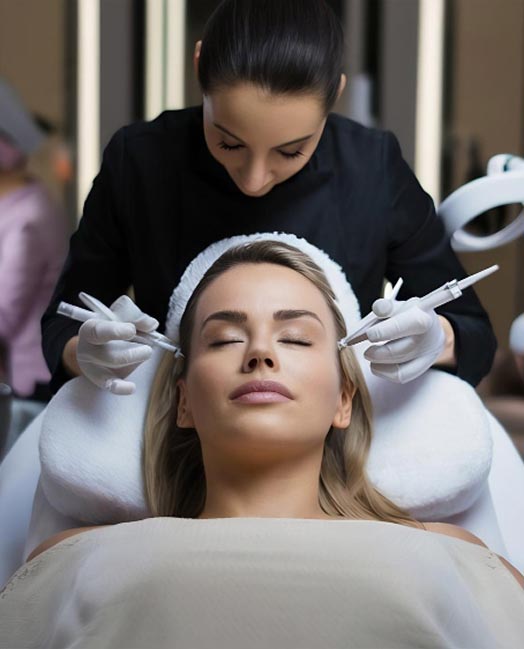

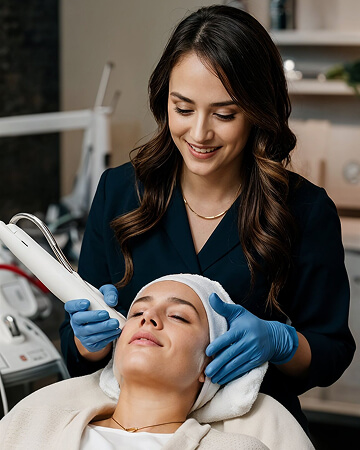
Regenerative Gynaecology & Infertility focuses on treatments and technologies that help both men and women conceive a biological child with the support of stem cell and regenerative medicine.
Our protocols combine autologous cellular therapies with advanced clinical care to address the underlying causes of reduced fertility — restoring tissue function rather than only managing symptoms.
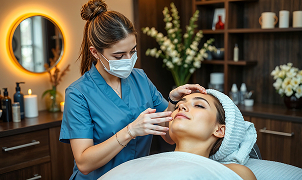
PRP therapy uses the patient's own blood plasma enriched with platelets — blood cells containing many alpha-granules packed with growth factors. These growth factors play a key role in tissue regeneration, activating cell growth and renewal.
When highly concentrated platelet-derived factors are injected into damaged or atrophied tissues, healing and regeneration processes are activated.
PRP therapy significantly improves embryo implantation in both IVF cycles and natural pregnancy. It is indicated in the following situations:

PRP therapy helps with ovarian rejuvenation and makes it possible to restart the menstrual cycle — offering hope to patients whose ovaries have ceased normal function before age 40.

For menopausal and perimenopausal women — PRP therapy can help grow more eggs, increasing the chances of a positive outcome in an IVF cycle or of spontaneous pregnancy.

Successful embryo implantation is otherwise impossible due to a thin endometrial layer. PRP therapy is a real breakthrough here, especially when the endometrium cannot be grown with medication alone.
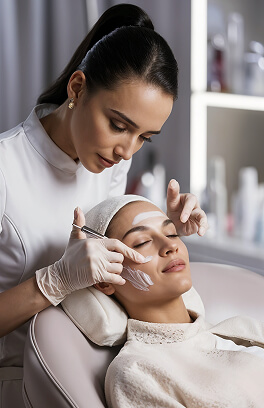
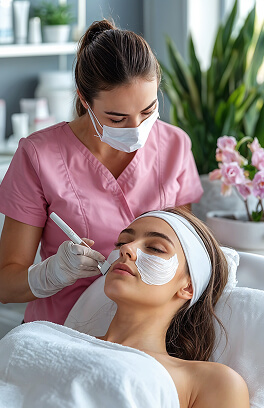
PRP therapy of the testicles is offered in the most complex cases of male infertility — for example, oligozoospermia, where there are very few spermatozoa in the sperm (under 10 million / ml). In such cases, the chances of pregnancy are typically very small.
PRP therapy of the testicles is offered as an innovative treatment option. The purpose of the procedure is to activate spermatogenesis (sperm production) where it is insufficient — the root cause of reduced sperm quality and the inability to achieve pregnancy with a partner.
When highly concentrated platelet-derived factors are injected into the testicular tissues, cell healing and regeneration processes are activated, supporting the restoration of spermatogenesis.
This procedure is innovative and, due to its recent emergence, remains experimental. According to currently available data, it succeeds in approximately 50–60% of cases. Specialists in advanced regenerative medicine view this as a meaningful step forward in reproductive technology — offering a potential route to pregnancy with the patient's own eggs, or to the restoration of spermatogenesis in men, in situations that previously appeared hopeless.
BMAC ovarian rejuvenation is considered for the following patient profiles.
BMAC is a natural product in which a high concentration of platelets, CD34+ cells, and mononuclear cells is achieved — with growth factor concentrations 4 to 5 times greater than plasma.
These cytokines play an important role in cellular proliferation, chemotaxis, and differentiation of mesenchymal and other cells, and they promote angiogenesis (new blood vessel formation).
From bone marrow preparation to objective evidence of rejuvenation — each step is monitored by our regenerative medicine specialists.

Bone marrow is drawn from the iliac crest and then isolated using specific techniques — including centrifugation — to produce a concentrated BMA.

The prepared BMAC is injected into both ovaries via laparoscopy.

Our protocol is supported by BHRT (Bio-identical Hormone Replacement Therapy), personalised supplementation, and genomic-based dietary guidance.

AMH, FSH, LH, and Estradiol levels are measured at monthly intervals — during menstrual flow in menstruating women, and at monthly intervals in those who do not menstruate — for a period of six months.
If AMH levels rise while FSH, LH, and Estradiol levels decline, this is taken as objective evidence that ovarian rejuvenation has occurred.
Every patient's situation is unique. Book a confidential consultation to discuss whether PRP or BMAC therapy is right for you.